Thursday, April 12, 2018

Pt. Brijbhushan Kabra (1937-2018) and the Indian Classical Guitar


Until the 1960s, the Hawaiian Slide Guitar had been heard mainly in film songs, and in the regional music of Bengal. The credit for elevating the instrument to the Hindustani art music platform goes to Pandit Brijbhushan Kabra.
With friend and collaborator: 
Pt. Shivkumar Sharma
In 1968, Kabra recorded the album “Call of the valley” with Shivkumar Sharma (Santoor) and Hariprasad Chaurasia (Flute), which won a Platinum Disc. After this landmark release, there was no looking back for Kabra and the instrument. Thereafter it has maintained a stable presence on the Hindustani music platform, and also created an impressive constituency for itself in North America and Europe.  
In the basic model, the shell of the instrument is an F-hole Guitar of European design, acoustically and structurally enhanced to support a multitude of strings. But, the design of the Indian adaptation is far from standard yet. There are several variants in circulation, with some of them even sporting names suggesting the identities of their “creators”.

The Vichitra Veena legacy


 In Hindustani music, the Hawaiian Guitar has filled the vacuum created by the decline of the Vichitra Veena, which has been used as an accompanist to vocal music, and also as a solo instrument. The technique of executing melody on these two instruments is identical, and draws upon a history of older Indian instruments -- the Ghoshaka Veena described in Bharata’s Natyashastra [200 BC- 200 AD], and the Ekatantri Veena repeatedly referred to in musicological texts from the eleventh century AD. In the Carnatic tradition, the same technique is used for melodic execution on the Gottu Vaadyam, --also called Chitra Veena. All these instruments execute melody by sliding the hard cylindrical or round object along the strings, rather than stopping the strings against the frets, as in the case of instruments like the Rudra Veena, Sitar or the Spanish guitar.
The Vichitra Veena receded from the mainstream almost simultaneously with the Dhrupad/ Dhamar genre of mainstream music, of which the instrument was once an integral part. The major reason for its decline would appear to be its cumbersome handling, and an acoustic quality unsuited for the contemporary environment, governed by the electronic manipulation of musical output.
The Hawaiian slide-Guitar appeared to solve both these problems simultaneously while offering the distinctive quality of the slide-Veena -- the ability to reproduce every nuance of Indian vocalism with minimum interference from the sound-priming [plucking] activity. Admittedly, the slide-Guitar was inferior in this role to the Sarangi, a bowed instrument. But, within the plucked lute family, and as a successor to the Vichitra Veena, it could have no peer as a mimic of the vocal expression. Because of this advantage, the Hawaiian slide-Guitar offered a much wider range of stylistic options than the Sitar and Sarod, both of which required a higher frequency of plucking.
The only trigger the slide-Guitar required for reviving the Vichitra Veena legacy was towering musicianship, which could demonstrate its musical potential, especially relative to the dominant plucked lutes -- the Sitar and Sarod.  The instrument found its  champion in Brijbhushan Kabra.

Kabra’s Guitar

Brijbhushan, a qualified mining geologist, came from a business family with a deep involvement in music. His father had studied the Sitar under the legendary Ustad Enayet Khan, the father of Ustad Vilayat Khan. Brijbhushan’s elder brother, Damodarlal, was a distinguished Sarod player trained by Ustad Ali Akbar Khan. In defiance of acute cynicism within the family, Brijbhushan said “no” to the Sitar as well as the Sarod, and accepted the challenge of elevating the slide-Guitar to a level of parity with them under the tutelage of Ustad Ali Akbar Khan.
Inevitably, Kabra went along with the established musical approach of the major plucked lutes, the Sitar and Sarod. The first step in this direction was the introduction of chikari [drone] strings. As on the Sitar and the Sarod, his chikari set is mounted on a post midway up the stem of the Guitar on the bass [inward] side. His repertoire includes a three/four tiered alap-jod-jhala movement, slow tempo compositions primarily of Masitkhani format in Tritala, medium tempo compositions in Rupak [seven beats] and Jhaptala [ten beats], and fast tempo compositions in Tritala [sixteen beats] followed by a jhala. As with the Sitar and Sarod, light and semi-classical compositions in a variety of tala-s [rhythmic cycles] became an important part of a comprehensive repertoire to satisfy contemporary audiences.
Despite the benefit of guidance from Ustad Ali Akbar Khan, a colossus amongst instrumentalists, Kabra had to rely on his own resourcefulness for technique. Kabra’s musical vision is deeply entrenched in vocalism. It might even be said that, in the melodic content of his music, he has pitted his instrument against the Sarangi, rather than the Sitar or Sarod. He places the highest premium on the capabilities of the slide-Guitar for delivering the melodic continuity and microtonal subtleties of Hindustani vocalism. This logically meant the development of an idiom and technique that would minimize the frequency of strokes, and maximize the melodic density achievable under the impact of each stroke. These became the guiding principles of Kabra’s musical endeavors.
Within the raga presentation format of the plucked lutes, Kabra’s musical vision, and the instrument’s capabilities, led him to develop the anarhythmic and melodically rich alap form as his forte. In order to pack the maximum power into each stroke, Kabra dispensed with the picks conventionally used by slide-Guitarists, and opted to play with wire plectra [mizrab-s] used by Sitarists.
Once he had harnessed additional stroke power with Sitar plectra, he could achieve the desired manipulation of timbre, volume, and sustain without the addition of sympathetic strings. In an interview with the present author, Kabra expressed the view that the slide-Guitar is so rich in the delivery of microtonal values and melodic continuity,  that the Sitar/ Sarod model of acoustic design is irrelevant for the instrument. Kabra also argued that the sympathetic strings, which support only the discrete swara-s in the raga scale, have the effect of drowning out microtonal subtleties on the Slide guitar. As a result, the delivery of melodic value is limited, rather than enhanced, by the sympathetic strings, which his juniors amongst Guitarists have widely adopted.
In order to minimize the melodic discontinuity in his music, Kabra reduced the role of multiple-string execution by opting, once again, for a Sitar-style solution -- of using the first string as the main melodic string, and tuning the second and third strings also in the Sitar style . This enabled him to execute melody across two full octaves on the main string, requiring the second and third strings only for the lower octave. In his interviews to the American press, he has argued that Hindustani music, with its vocalist model, does not require a melodic canvas larger than three octaves. 

Kabra’s music
Kabra’s repertoire is basically mainstream music, biased in favour of popular raga-s like Puriya Kalyan, Bageshri, Bihag Madhuwanti, Jaijaiwanti, Hameer and Nat Bhairav. His discography shows a fair representation of light music – melodies like Kafi, Gara, Rajasthani folk, Mand, and Piloo. The patent raga-s of the Maihar Senia lineage, such as Gauri Manjari and the Carnatic raga Kirwani appear to have only a small presence in his performing material.
With his design of the instrument, and his novel technique, Kabra has achieved an acoustic richness in the musical output of the Slide Guitar, which approaches the more mature plucked instruments like the Sitar and the Sarod. In the presentation of raga-based music, Kabra strongly favors the alap-jod-jhala forms, often even as stand-alone pieces of music, without rhythm-accompanied forms following it. Even on a mass medium like the radio, he is known to have performed a 40-minute alap-jod-jhala as a self-sufficient rendition. This predilection is consistent with his highly vocalized melodic imagination, and his belief that these movements are the best vehicles for the unique melodic capabilities of his instrument. Kabra’s percussion-accompanied music largely follows the orientations of the Maihar Senia lineage. His bandishes are composed in vilambit, madhyalaya or drut Tritala, or in madhyalaya Roopak or Jhaptala.
Kabra has also been an immensely successful duet musician. His partnership with Shivkaumar Sharma and Hariprasad Chaurasia produced the “Call of the valley” album, which is now the stuff of legend. His duets with Shivkumar Sharma – particularly the LP recording of Jhinjhoti – ia also amongst the most memorable pieces of duets produced in recent history.
Kabra established himself and the slide-Guitar in Hindustani music at a time when three giants -- Ustad Vilayat Khan, Pandit Ravi Shankar, and Ustad Ali Akbar Khan – were at the peak of their creative and technical prowess. In such an environment, the mere novelty of the slide-Guitar could not have assured the instrument a future in Hindustani music. Kabra’s success can be explained only as a victory of his perception, and exploitation, of the distinctive musical value that the Hawaiian slide-Guitar had to offer.

After Kabra

In response to the changes in the environment of Hindustani music, Kabra’s successors on the slide-Guitar scene, including his own disciples, have drifted away from the technical and stylistic choices he made. Most of them have chosen a stylistic direction with a much higher stroke density than Kabra’s, and an extensive use of multiple-string execution as an important element in their music. The slide-Guitar idiom is now drifting closer to the idiom of the Sarod, but surpassing it in dazzling potential, thanks to the slide-Guitar’s superior ergonomics. The technical decisions of the younger Guitarists reflect these directions.
A melodic canvas spanning four octaves, and across five strings, is now in favour.  Sympathetic strings have now become a stable feature of the Indian classical Guitar. The emphasis is now on kaleidoscopic tonal patterning and dazzling virtuosity, rather than elaborate raga presentation and melodic richness. Strokes therefore need ergonomic facility more than depth or power. To this end, Guitar-style picks have replaced Kabra’s mizrab. Some Guitarists have also found it efficient to shift the chikari drones to the treble [outward] side of the instrument.   
Whether as an acoustic machine, or as the presenter of a well-defined style of instrumental music, the Indian classical Guitar is still in a state of evolution. While the succeeding generations of Hindustani Slide Guitar maestros have successfully sent the instrument into international orbit, Kabra's pioneering and formidable musicianship remains a landmark in the history of Hindustani instrumental music. .
(c) Deepak Raja. April 2005


Thursday, March 22, 2018

Shaping a life in classical music


Paper presented to the Seminar on Pedagogy of Performing Arts, hosted by the Lalit Kala Kendra, Gurukul, Savitribai Phule Pune University, on March 6-7, 2018. 

This paper has been published in my last book. 


Tuesday, February 20, 2018

Thursday, January 11, 2018

Monday, October 2, 2017

"The Surbahar's future? Andhakarmoy" অন্ধকারময় says Smt. Annapoorna Devi


In August 2009, I sought an interview with one of the most distinguished performers on the Surbahar, Smt. Annapoorna Devi. Getting a personal interview was, as anyone can imagine, impossible. But, her husband and Sitarist, the late Prof. Rooshikumar Pandya agreed to help. She dictated to Rooshi Bhai the answers to my questions.I reproduce here the full text of the questions and answers.
  
Question: Did Alauddin Khansaheb play the Surbahar? If so who were his teachers?
 Answer: No.  Baba played Sarod , Sursingar, violin and several other instruments.  

Question: It is known that Ayat Ali Khansaheb was a Surbahar player. Who were his teachers?
Answer: Baba took Ustad Ayat Ali Khansaheb (his brother) to my Dadaguru Ustad Wazir Khansaheb, Rampur.   Ustad Wazir Khansaheb then taught surbahar to Ustad  Ayat Ali Khansaheb.

Question: Did you study the instrument with Baba or Ayet Alai Khansaheb, or both? 
Answer: I studied under Baba. 

Question: Have you trained any students on the Surbahar? Can I have the names, please?
Answer: Niloufer (Ustad Rais Khan’s sister) did learn from me for some time.  

Question: Would you care to name some of the good Surbahar players she has heard in your times?  What was their background? Whose students were they? 
 Answer: I hardly went out. Didn’t hear any surbahar players. 

Question: Were you taught the 3-mizrab, 2 mizrab, or single mizrab Baj of the Surbahar? With how many mizrabs did you perform? Did you use the little finger for the Chikari, as on the Been?
Answer: I have performed  wearing two mizrabs as well as single mizrab. Yes. I use the  fingernail of the little finger for the chikari. 

Question: In your gharana, has Surbahar been played only for alap-jod-jhala? Or were Dhrupad-Dhamar or Masitkhani bandishes also played on the instrument? 
Answer: In our Gharana surbahar is for alap-jod-jhala -- although occasionally we do play tar paran and Dhrupad compositions. 
  
Question: Is it right to say that the Surbahar uses only Da (inward) strokes on the Baj string? Or, are Ra (outward) strokes also used?
Answer: Yes. As a rule, this is the Surbahar technique.  However, when not playing pure Dhrupad anga, the Ra stroke are used for playing fast passages in some ragas. 

Question: Is it right to say that the Surbahar melodic idiom is predominantly a "meend" idiom, with virtually no role for fretwork techniques? My experience tells me that Surbahar notes sound lifeless on the frets.
 Answer: True. 

Question: What is the correct/ most common thickness of the Baj string on the Surbahar? Niloufer had told me Rais Khan and she used No. 6. Vilayat Khansaheb, and Imrat Khansaheb use No. 5. What gauge did you use in youth? Is it decided by the acoustic design of the particular instrument?
Answer: I think it is a question of preference.  Some sitar players use no. 3 while some use no 4.  For surbahar some people feel comfortable with no. 6.  I use  no. 5. I do not know much about the acoustic design but I think the person who  does the jawari needs to do it a bit differently for different gauges. 

Question: At what pitch are most Surbahars tuned for solo performance?
Answer: I tune my Saa to the  tivra madhyam of the sitar 

Question: The Surbahar has survived as long as Siatrsists were willing to master two different instruments. Can you give me your views on the future of the Surbahar?  
Answer: Andhakarmoy!     

 (c) Deepak S. Raja 2009

Thursday, September 7, 2017

Thursday, August 10, 2017

Book Review: Biography of Smt. Gangubai Hangal by Deepa Ganesh


Title: A life in three octaves
Subtitle: The musical journey of Gangubai Hangal
Author: Deepa Ganesh
Publisher: Three Essays Collective, Gurgaon, 
First edition: 2014
Pages: 220. 
Price: Hard Cover: Rs. 600

This biographical work on the towering Hindustani vocalist, Gangubai Hangal (1913-2009), is based on a series of visits the author made to the diva’s home, and extensive interviews with people close to her subject. The author’s discovery of this extraordinary personality spans a period of 4 years (2005-2009).

The book traces the emergence of Northern Karnataka as a powerhouse of Hindustani classical music during the colonial period. Substantial credit for it goes to the Wodeyar princes of Mysore, who were patrons to the finest musicians of the Carnatic and Hindustani traditions alike. Hubli, Dharwad and Belgaum were natural stop-overs for Hindustani musicians travelling between their homes and the Mysore Court. This led to an exchange of musical ideas between Hindustani and Carnatic musicians of the region.  

From the late 19th century, the bi-lingual region, (Kannada + Marathi) enthusiastically patronized Marathi theater, which featured some of the finest Hindustani musicians of the era. From the dawn of the 20th century, the gramophone record made the finest Hindustani musicians – from within and outside regional theater – household names in Northern Karnataka. Simultaneously, the missionary work of Bhatkhande and Vishnu Digambar – both from Maharashtra -- had begun to democratize the musical culture.  The prestige of Hindustani music shot up immensely in the region, as religious leaders attached to the Lingayat monasteries became proficient in Hindustani music, and started imparting training to young aspirants.  This configuration of forces enabled the emergence of Gangubai as a significant musical persona.

The Kirana gharana founder, Abdul Kareem Khan, visited Hubli often, became an admirer of Gangubai’s mother, Ambabai, a Carnatic musician, and allowed his own music to be influenced by her musicianship. Young Gangubai was taught Carnatic music at home, but succumbed to the attraction of Hindustani music, which played from the gramophones of every neighborhood tea stall.  After an aborted apprenticeship with Krishnamacharya, a local Hindustani vocalist, Gangubai ended up as a disciple of Rambhau Kundgolkar (Sawai Gandharva) from nearby Kundgol, the foremost disciple of the Kirana gharana founder, Abdul Kareem Khan.

The book deals adequately with Gangubai’s family and social circumstance. Her mother, Ambabai, was a Carnatic vocalist nurtured in the Devadasi tradition. She was greatly respected for her musicianship, but ostracized socially for her lower-caste birth and her profession. According to the Devadasi tradition, Ambabai became the subordinate (non co-habiting) wife of an upper-caste landlord, and headed a matriarchal family, dependent on her earnings as a musician. For Gangubai, her father, Chikurao Nadiger, represented an occasional and irrelevant presence during her mother’s lifetime. Ambabai died while Gangubai was still in her teens. 

 Gangubai became the breadwinner of the family, which included her two maternal uncles, and their growing families. Her uncles’ contribution to the household expenses was unstable. At its peak, her family of dependents numbered 20. Gangubai herself accepted the role of a subordinate wife to Gururaj Kaulgi, a Brahmin widower, who gave Gangubai three children and a host of financial problems arising from his incompetence as a breadwinner. For Gangubai, starvation was the only alternative to success as a musician. The greatness came because the survival anxiety never left her.

Deepa Ganesh’ work details painstakingly the role of her maternal uncle, Ramanna, in preparing Gangubai for her career in music with a fatherly presence, substantially replacing her mother, Ambabai as the anchor of her life. Ramanna used the good offices of a family friend, Dattopant Desai, to place Gangubai under the apprenticeship of Rambhau Kundgolkar, and acted as her protector and companion on her daily trips from Hubli to Kundgol for her tuitions. Rambhau was the principal disciple of Abdul Kareem Khan, who had enriched his musical vision by studying with several other maestros from other lineages.

As a result, he had carved out an illustrious career as a singer-actor in regional theater. After his withdrawal from the nomadic life of the theater, he became available as a Guru. Because of Gangubai’s devotion to him, and fastidious compliance with his teaching, she soon became his favorite disciple. He kept a hawk’s eye on her commercial recordings, and radio broadcasts for compliance with his training. Her musicianship flowered under his demanding care. The bond of devotion between the Guru and disciple was such that Gangubai brought Rambhau to her own home along with his wife and cared for him for three years after his paralytic stroke. In return, even during his last days, even as he was sinking, Rambhau insisted on teaching Gangubai newer Raga-s and compositions.

Gangubai’s professional career was virtually launched in the electronic media. By the 1930s, the radio and the gramophone record were fast growing in reach and popularity, and were hungry for talent. On these platforms, starting in 1936, Gangubai was able to build a national reputation as a formidable musician. Soon after her professional debut, she had a serious problem with her throat. The surgery deprived her voice of its feminity and agility. She was left with a masculine voice of limited maneuverability and range. (The title of the book, in this context, is ironic) What ensued was an intense struggle to re-invent her repertoire and her approach to music. She transformed this setback into a unique musical asset, and continued to acquire a following.

She enjoyed immense stature on the concert circuit between 1950 and 1970, but continued to perform ,as her vitality levels would permit, until a few years before the end came. The shower of recognition and awards had begun as early as 1948, and grew into a torrent. This included honorary Doctorates from several Universities, the fellowships of performing arts academies, nominations to houses of state and central legislatures, and the Padma awards. As her performing career waned, Gangubai, a well-informed and well-read lady, allowed herself to evolve into a public personality, heard with respect on social issues for her wisdom and simplicity of demeanor.

Besides her uncle and her Guru, the two anchors of her life after her mother’s demise, the book deals appropriately with some other special relationships Gangubai developed during her life.  During her apprenticeship with Rambhau, she developed a warm fraternal relationship with Bhimsen Joshi, a few years her junior. Two of her seniors in the profession, Kesarbai Kerkar, and Hirabai Barodekar, developed great affection for Gangubai, and furthered he career. Mallikarjun Mansoor, a childhood friend, remained a close friend of her family throughout. 

As her career blossomed, she developed a personal friendship with Mrs. Sushila Ambike, and Professor of Sanskrit in Delhi University, and earned the admiration of Mr. HY Sharda Prasad, the media advisor to Mrs. Indira Gandhi. The famous Kannada poet, DR Bendre, who was once her teacher in school, became her close friend and admirer, giving her access to a presence in the social and political life of Northern Karnataka.

The author presents an elaborate picture of Gangubai’s rootedness to her native Dharwad, to her responsibilities as the head of her household, to her family and to the kitchen as the object of her lifelong struggle for economic security and the vehicle for her hospitality. (Appropriately, the book even ends with two of her favourite recipes). Gangubai accepted all the financial strains of her domestic  responsibilities, and denied herself comforts and luxuries of all kinds in order to fulfil them. Her only relationship that the author rightly places under a microscope is the one with her daughter Krishna.

Krishna was Gangubai’s first child, born to her when she was only 16. She was never formally trained in music. But, she had a melodious and agile voice, an exceptional musical mind, and a natural flair. In addition, she was an extremely well-organised person. Krishna speedily became Gangubai’s concert planner, and manager. Her musical role began as an accompanist, but grew into that of a partner, and as Gangubai’s vitality levels diminished, ended finally as lead singer. Gangubai evidently found it convenient to deny Krishna her own life, and found arguments to justify her convenience. Krishna’s marriage was never considered on the grounds that her constitution was too weak for child-bearing. 

Independent concert engagements for Krishna were blocked because her solo concerts would bring in a much lower fee than a joint concert.  The author believes that Gangubai feared the loneliness that would ensue Krishna’s independence. But, as luck would have it, Krishna succumbed to cancer in her 74th year, leaving Gangubai, then 90, to face a lonely end.

The author recognizes that Gangubai’s  extra-musical persona is more firmly etched in the public mind than her musicianship. There is some merit in the author’s suggestion that Gangubai herself may have shaped this phenomenon by allowing her humble beginnings and her struggles to dominate public attention. The purpose of so doing  -- though perhaps unconscious – would have been to highlight the magnitude of her accomplishments.  

The result was that while her formidable musicianship is acknowledged, its distinctiveness has remained largely undocumented. All that is remembered of her music is her androgynous voice, austere musical vision, soulful delivery, deploying a deliberate, unhurried approach to performance.  The author attempts to partly enlarge the assessment of her musicality by comparing it to that of her leading contemporaries, especially those of the Kirana tradition. This reviewer believes that this task remains yet to be done satisfactorily, and deserves a survey of several senior musicians who had heard Gangubai in her prime.

The details this work provides on Gangubai’s social and economic circumstance,  and her grooming under Rambhau Kundgolkar, have been familiar for long to serious music lovers, especially of the 60+ generation. The author has done well to present these in broad brush strokes rather than the excruciating detail that has appeared earlier elsewhere. What makes this work a comprehensive word picture of a towering personality is the author’s exploration of her life beyond the known. The essential tenor of this biographocal work – and perhaps also its inspiration -- is adulatory, though the author’s scrutiny of Gangubai’s relationship with Krishna is objective enough to avert the charge of gaga journalism. 

The work does occasionally drift towards journalistic “editorializing”, with a stance akin to that of a social scientist. This may irk experienced readers of biographical literature. The book also reveals a feminist streak, which appears contextually unwarranted, except for the incidental reality that this is a woman writer’s work on a lady musician.

The book exposes some lapses at the Editorial Desk. For instance, Gangubai’s son is mentioned variously as “Babu” and “Babanna”. Her daughter-in-law is referred to variously as “Lalitha” and “Lalithakka”. Likewise, Ustad Abdul Kareem Khan is referred to as “Abdul Kareem Khan”, “Kareem Khan”, and “Abdul Kareem Khan Saab”. The standardization of nomenclatures would have greatly helped readers unfamiliar with culture-specific variations. While Kannada words mostly carry translations in parentheses, there are several cases of usage unaccompanied by translations. 

The occasional recourse to musicologically sensitive words may make the serious reader wince. He will, for instance, wonder what the terms “purity of a note” or the “purity of music” are intended to connote.  The larger issue is whether the lay reader will understand any better. The connotation of such phrases is seldom made transparent by the context in which they are used.

The author’s purpose was to “rediscover a woman who occupied a niche in musical folklore”.  The author admits to the limitations of her enquiry arising from the advanced age of her subject and fragility of her recall. Nevertheless, the author’s purpose stands largely fulfilled. The book is a welcome addition to the reservoir of biographical literature on towering 20th century musicians. Its timing ensures that it will attract a readership of young music lovers who may know Gangubai through her recordings, but remember her either as everybody’s idea of a Grandmother, or as the Grand Old Lady of Northern Karnataka.

Reviewer: Deepak Raja 
Review published in THE BOOK REVIEW

Monday, July 17, 2017

Sunday, April 17, 2016

Book Review: The Raga-ness of Raga-s. The Statesman, Kolkata, April 16, 2016

  Beyond Grammar

Author presenting the book to Pt. Arvind Parikh
Deepak S Raja, disciple of Pandit Arvind Parikh (sitar-surbahar, Etawah gharana) and the late Dhondutai Kulkarni (khayal, Jaipur-Atrauli gharana), is a much-respected name in the world of musicology. He studied the subject under the guidance of eminent scholars, has won several prestigious awards and works as a repertoire analyst for India Archive Music Ltd, New York, apart from having authored three books including Khayal Vocalism, and Hindustani Music Today. He blogs extensively about his experiences at http://www.swaratala. blogspot.com. Raja’s analytical but melodious writing draws its sap from a wide variety of disciplines like art, history, culture, economics, sciences, psychology, etc. His latest book is The Raga-ness of Ragas: Ragas beyond the Grammar (published by DK Printworld (P) Ltd in 2016; Rs 1,250).

The book begins with “Perspectives on Raga-ness” by explaining and analysing the concept called raga and its relation with rasas; and then moves on to explore and identify the essence of a raga in a) bandishes: that showcase the features of a raga from several angles; b) alap: which elaborates the raga at slow pace; c) taan: which follows raga movements at fast pace that “emphasise the sameness of all ragas”; and, above all, d) the raga-ness of the musician who performs and composes at once.

Raja admits that since “Hindustani music grants the musician the simultaneous roles of performer and composer”, this creative licence has helped in the evolution of ragas. According to him, the raga is “a melodic structure, tight enough to remain distinct and identifiable and yet loose enough to form the basis for considerable improvisational freedom”. Under the circumstances, “Ragas can, and do change even over time.”

The second part of the book, “The world of the Raga”, contains the analysis of 49 ragas replete with their ascending-descending orders, catch phrases, parental scale, sister ragas, etc, along with their historical evolution and opinions of several legendary musicians and musicologists. The book is further enriched by a foreword penned by eminent vocalist Vidushi Ashwini Bhide, an introduction by Lyle Wachovsky, a guest essay on the concept of “Rasa and Western System of Keys” by Alessandro Dozio and a glossary of terms — nicely explained. The most admirable qualities of the book are the author’s lucid pen, at times dipped in humour. Interesting anecdotes have spiced up the book that opens new vistas of melodic analysis.

Reviewer: Meena Banerjee


Book Review: The Raga-ness of Raga-s. The Hindu, April 15, 2016.


FRIDAY REVIEW: April 15, 2016
Musicologist Deepak S. Raja explores “the Raga-ness of Ragas” in his latest book.

It is a fact that as compared to the art of music, its philosophy is a dry subject. Even highly educated practicing
Author with Ustad Shujaat Khan
musicians, therefore, keep musicology at arms’ length. This is one sphere where, in their haste to master the delightful techniques, most aspirants prefer to follow the footsteps of their gurus without any counter-question arising out of personal understanding and resultant views. I have a feeling they know not what they are missing!

But exceptions are there who straddle both music and musicology with delighting clarity. My Guru Pandit Amarnath, inspired by the analytical aptitude of his legendary ustad, Amir Khan Sahib, never accepted anything without weighing its values. This, according to him, would give additional thrill and confidence as what-s and why-s always enrich the how-s. He would often tell us to think beyond the clichéd Ranjayate iti ragah and explore the tattwa (matter) that resides behind the façade of a given raga, that makes it a living thing, that dies with the end of a concert to be reborn in another – and in a new avatar!

All those cherished memories dawned upon me gleaming with new discernments when I read “The Raga-ness of Ragas” authored by well-known musicologist Deepak S Raja. The title of the book has the tagline “Ragas beyond the Grammar”. It was obvious that the book’s domain is empirical – beyond the tangible periphery of mere academics. It had to be; because those who know Deepak Raja, are aware that he is a sitar and surbahar exponent (Etawah Gharana) and learnt khayal (Jaipur-Atrauli Gharana) apart from studying musicology under the guidance of eminent scholars. He is a repertoire analyst for India Archive Music Ltd., New York and writes extensively about his experiences as a musician-cum-researcher. Far away from the scholastic dryness, his works (this one is his fourth book in a row) are steeped in tried-and-tested melodic recipes.

The author admits that since “Hindustani music grants the musician the simultaneous roles of performer and composer” this creative license has helped in the evolution of ragas. The raga is “a melodic structure, tight enough to remain distinct and identifiable and yet loose enough to form the basis for considerable improvisational freedom.” He reiterates a well-known fact that “Ragas can, and do, change even over time.” Under the circumstances, standardisation of ragas’ features becomes necessary. But being a sensitive musician himself, the author did not try to shackle the beautiful body of the raga; instead he approaches the core of its heart from a totally different angle of a mystic.

Divided into two parts this book begins with ‘Perspectives on Raga-ness’ by explaining and analysing the concept called raga and its relation with rasas; and then moves on to explore and identify the essence of a raga in a) bandishes: that showcase the features of a raga from several angles; b) aalap: which elaborates the raga at slow pace; c) taan: which follows raga-movements at fast pace that ‘emphasise the sameness of all ragas’; and above all d) the raga-ness of the musician who performs and composes at once.

According to the author, musician’s own personality reflects through his art as he relates to his music according to his saatwik (pristine pure), raajasik (passionate) or taamasik (impure) mindset. Saatwik chooses to treat the raga as the Almighty. Raajasik follows the commonly accepted form of raga to win mass approval. Taamasik remains oblivious to raga’s soul; only entertainment becomes his goal to earn money. Any one or all can influence an artiste’s psyche.

To add to the melodic content in the real ‘practical’ sense, the second part of the book, ‘The world of the Raga’, contains the analysis of 49 ragas replete with their ascending-descending orders, catch phrases, parental scale, sister ragas etc. along with their historical evolution and opinions of several legendary musicians and musicologists.

The book is further enriched by eminent vocalist Vidushi Ashwini Bhide’s soul-searching foreword, an introduction by Lyle Wachovsky, a guest essay on the concept of ‘Rasa and Western System of Keys’ by Alessandro Dozio and a glossary of explicated terms. The most admirable qualities of the book are the author’s lucid pen, at times, dipped in humour, and an eye for apt melodious anecdotes. It opens new vistas of melodic views, no doubt.

Reviewer: Meena Banerjee

Monday, April 11, 2016

Book Review: The Raga-ness of Raga-s. by Shuchita Rao


Title: The Raga-ness of Ragas
Author: Deepak S. Raja
Hardcover 366+ pages, 
ISBN 978-81-246-0835-7
Published in India, 2016 by D.K Printworld
Available on Amazon.com Price: $62.50

Growing up in India and learning about “ragas” from master musicians, I learned how to sing several ragas with ease. I never felt the need to explain the concept of a raga (a key melodic concept in Indian classical music) to anyone. Every listener was already familiar with it.  After moving to the United States, I found my listeners asking for an explanation for the term “raga” even before listening to it. “What is a raga?” they asked.


For decades (if not centuries), the exercise of defining the term “raga” has challenged academicians, teachers and practicing musicians alike. The noted Indian musicologist and author Deepak Raja started out on a journey several years ago with the mission to explore the subject of what constitutes the essence of ragas (what the author terms as “raga-ness”) and to articulate it to the best possible extent through the medium of language. His reflections on this topic have taken the form of a book titled “The Raga-ness of Ragas” published in early 2016.

In this beautifully bound hardcover book, the author Deepak Raja examines the concept of a raga and its raga-ness from the points of view of their melodic and aesthetic grammar. The author’s personal observations on Hindustani music, quoted excerpts from ancient classic treatises as well as contemporary books on Indian music and the scholarly perspectives of practicing musicians make the book an interesting read.  By relating funny stories and anecdotes, the author manages to infuse liveliness in what could otherwise be a dry and theoretical study.

The book is divided into two parts. The first part contains eleven comprehensive essays on the foundational concept of the raga, and how the essence of a raga can be established through the proper and effective use of elements such as bandish (composition), alaap (slow, meditative movement that unfolds the raga), taans (faster melodic movements performed during the rendition of the raga) as well as special techniques used by vocalists and instrumentalists. In his capacity as a repertoire analyst for India Archive Music Ltd based in New York, the author analyzed over one hundred ragas performed by 50 prominent musicians. A survey of 49 of these 100 ragas are presented in the second part of the book.

A brilliant foreword by the eminent Hindustani vocalist and composer, Dr. Ashwini Bhide Deshpande, a succinct introductory chapter by Lyle Wachovsky of New York based India Archive Music Ltd, an illuminating guest essay on the concept of “Rasa and Western System of Keys” by Alessandro Dozio, a detailed glossary of terms and explanatory notes as well as a comprehensive bibliography are great additions to the book.

The opening chapter of the first part of the book introduces the concept of a raga as a specialist vehicle in communicating emotional ideas. In the remaining ten chapters of Part I of the book, the fact that the raga takes on a new shape each time it is performed, the examination of the socio-economic context in which music practice evolved up until the 19th century, the consideration of ragas in terms of chemical metaphors such as allotropes, compounds and emulsions, a discussion about suitable performance times for ragas unique to the Hindustani system of music, the evaluation of the theory of Rasa in Hindustani music and the exploration of the concept of raga-ness manifested in the melodic elements of bandish, alaap and taans are discussed at length.

The second part of the book is an analysis of 49 ragas in terms of attributes such as melodic ascents, descents, parent family, musical notes of importance and the critical skeletal phraseology that establishes the center of melodic gravity for each of the ragas.  The author looks at the evolution of these ragas from a historical perspective and quotes the opinions of several well known scholars such as Bhatkhande, Manikbuwa Thakurdas, Peter Manuel, vocalists such as Faiyyaz Ahmed Khan and instrumentalists such as sitarist Ustad Vilayat Khan.

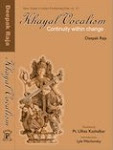
“I feel that raga-tattva or raga-ness of ragas is the most important facet of our musical culture requiring comprehension and preservation” said Deepak Raja to this book reviewer. Deepak Raja has authored two other books on Hindustani music titled “Khayal Vocalism” and  “Hindustani Music Today”. His blog on ragas http://www.swaratala.blogspot.com commands a dedicated following from Hindustani classical music lovers. 

Deepak Raja’s fine analytical and writing skills as well as the application of his knowledge from a wide variety of disciplines such as art, history, culture, linguistics, mathematics, physics, chemistry, economics and psychology to the study of Hindustani music are praise-worthy. His reputation for serious research in Hindustani music, critical thinking skills, sound analytical approach and brilliant articulation shine through this book. “The Raga-ness of Ragas” is one of the most enjoyable books on raga music that I have read in the recent times.

Reviewer: Shuchita Rao in Lokvani E-Paper